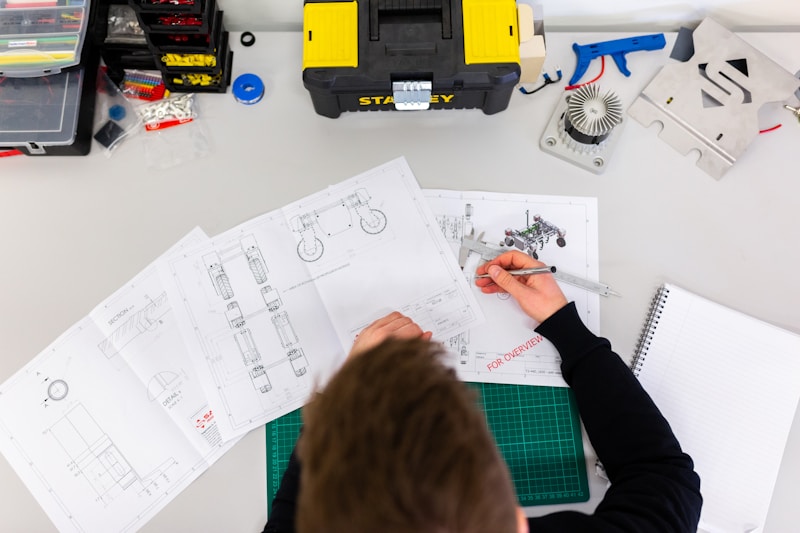
The construction industry is at a technological crossroads. Building Information Modeling (BIM) is rapidly replacing traditional CAD as the standard for design and documentation. This shift represents more than software evolution—it's transforming how buildings are conceived, coordinated, constructed, and operated throughout their entire lifecycle.
At Apex Architecture Inc, we work in both traditional CAD and modern BIM workflows daily. This comprehensive guide explains the fundamental differences between these approaches, explores why BIM is becoming the industry standard, and helps you understand what this transition means for your practice.
Understanding Traditional CAD
Traditional Computer-Aided Design creates digital drawings using geometric primitives—lines, arcs, circles, and text. CAD improved upon hand drafting by adding precision, editing capabilities, and digital storage, but maintained the same fundamental concept: separate, disconnected drawings for different views.
How Traditional CAD Works
- Independent Drawings: Plans, sections, elevations created as separate files or layers
- Manual Coordination: Changes in one view require manual updates to all related views
- Graphic Representation: Drawings show appearance but contain limited embedded information
- Document-Centric: Focus on producing paper or PDF construction documents
- Discipline Separation: Each trade works independently with limited integration
Understanding BIM
Building Information Modeling creates intelligent 3D models containing both geometry and data. BIM objects (walls, doors, windows, structural members) know what they are, how they relate to other objects, and carry performance information.
How BIM Works
- Parametric Relationships: Objects are connected—move a wall, and associated elements update
- Data-Rich Elements: Components contain manufacturer info, specifications, performance data
- Automatic Coordination: Plans, sections, elevations generated from unified model
- Model-Centric: The 3D model is the primary deliverable, drawings are views of the model
- Multi-Discipline Integration: Architecture, structure, and MEP coordinated in shared environment
Key Differences: BIM vs Traditional CAD
| Aspect | Traditional CAD | BIM |
|---|---|---|
| Primary Output | 2D drawings (lines and text) | 3D model with embedded data |
| Change Management | Manual updates across multiple files | Automatic propagation throughout model |
| Coordination | Requires manual cross-checking | Real-time multi-discipline collaboration |
| Information | Limited to visible graphics | Rich data for analysis and management |
| Clash Detection | Visual comparison, often missed | Automated interference checking |
| Schedules/Quantities | Manually calculated and typed | Automatically generated from model |
| Lifecycle Use | Construction phase only | Design through facility management |
Benefit #1: Enhanced Collaboration
Collaboration Benefits of BIM
BIM transforms disconnected workflows into integrated collaboration. Architects, structural engineers, MEP designers, and contractors work simultaneously in a shared model environment, seeing each other's work in real-time.
Traditional CAD Collaboration Challenges
- Each discipline works independently, discovering conflicts during construction
- File exchange via email creates version control nightmares
- Coordination meetings rely on manual overlay of drawings
- Changes by one team require redistribution and revision by all
- Communication delays between design and construction teams
BIM Collaboration Advantages
- Real-Time Updates: All team members see current model state immediately
- Cloud Worksharing: Centralized model access from anywhere
- Automatic Notifications: Team members alerted to changes affecting their work
- Integrated Communication: Comments and markups attached to model elements
- Single Source of Truth: One coordinated model eliminates conflicting versions
Benefit #2: Clash Detection
Automated Clash Detection
BIM software automatically identifies where building systems interfere—structural beams conflicting with ductwork, pipes passing through electrical conduits, or architectural elements blocking equipment access. These conflicts are resolved virtually before becoming expensive field problems.
Types of Clashes Detected
- Hard Clashes: Physical intersection of components (duct through beam)
- Soft Clashes: Insufficient clearance for installation or maintenance
- 4D Clashes: Construction sequence conflicts
- Code Clashes: Violations of accessibility, egress, or safety requirements
Cost of Clashes
Industry studies show that unresolved conflicts discovered in the field typically cost 10-20 times more to fix than those caught during design. A $5,000 clash resolution in BIM becomes a $50,000-$100,000 field change order.
Benefit #3: Lifecycle Project Management
BIM for Building Lifecycle
Unlike CAD drawings that serve only during design and construction, BIM models become valuable assets throughout a building's operational life—supporting facility management, renovations, and eventual decommissioning.
Design Phase
- Energy performance simulation and optimization
- Daylighting and natural ventilation analysis
- Cost estimation linked to model quantities
- Code compliance checking automation
Construction Phase
- 4D scheduling linking model to construction timeline
- 5D cost tracking with real-time budget monitoring
- Prefabrication coordination and digital fabrication
- As-built documentation captured during construction
Operations Phase
- Asset tracking and inventory management
- Preventive maintenance scheduling
- Space planning and move management
- Renovation and tenant improvement planning
- Energy monitoring and optimization
Industry Adoption: The BIM Transition
BIM adoption is accelerating globally:
- United Kingdom: BIM Level 2 mandated for all public projects since 2016
- Singapore: BIM submissions required for building approvals
- Scandinavia: Near-universal BIM adoption in public construction
- United States: Large firms mostly BIM; adoption growing in mid-size practices
- Middle East: BIM requirements increasing for major developments
Mandates Driving Adoption
Government requirements are pushing the industry toward BIM:
- Federal projects in multiple countries require BIM deliverables
- Some jurisdictions accept only BIM-based permit applications
- Public-private partnerships increasingly specify BIM requirements
- Large private clients (technology companies, healthcare systems) demand BIM
The Future: Where BIM is Heading
Emerging BIM Trends
The future of construction design extends beyond current BIM capabilities into digital twins, artificial intelligence, and integrated project ecosystems.
Digital Twins
BIM models evolve into "digital twins"—real-time virtual replicas of physical buildings:
- IoT sensors feed live performance data into the model
- Predictive maintenance based on actual equipment condition
- Real-time energy optimization based on occupancy and weather
- Simulation of proposed changes before physical implementation
Artificial Intelligence Integration
AI is augmenting BIM workflows:
- Automated design optimization for energy and cost
- Natural language queries for model information
- Predictive clash detection before systems are modeled
- Generative design exploring thousands of options
Cloud and Collaboration Evolution
- BIM platforms moving entirely to browser-based access
- Real-time collaboration with unlimited participants
- Integration with construction management platforms
- Global team coordination across time zones
OpenBIM and Interoperability
The future requires seamless data exchange:
- IFC (Industry Foundation Classes) becoming universal standard
- Reduced vendor lock-in through open data formats
- API ecosystems enabling custom tool development
- Cross-platform model federation from multiple sources
Challenges in BIM Adoption
Despite clear benefits, BIM adoption faces obstacles:
Learning Curve and Training
- Significant time investment to achieve BIM proficiency
- Workflow changes requiring process reengineering
- Staff resistance to changing established methods
- Ongoing training needs as software evolves
Technology Investment
- Software licensing costs higher than traditional CAD
- Hardware upgrades required for performance
- Network infrastructure for cloud collaboration
- IT support complexity increases
Process Change Management
- Contract modifications for BIM deliverables
- Intellectual property concerns with shared models
- Liability questions around model accuracy and coordination
- Standardization challenges across diverse project teams
Transition Strategy: Moving from CAD to BIM
For firms considering the transition, a phased approach reduces risk:
Phase 1: Pilot Projects
- Select small, low-risk projects for initial BIM implementation
- Train core team members deeply on pilot work
- Document lessons learned and refine processes
- Build confidence before expanding scope
Phase 2: Parallel Operations
- Run BIM alongside CAD for selected project types
- Gradually increase BIM percentage as proficiency grows
- Develop standards and templates for efficiency
- Build library of custom families and components
Phase 3: Full Integration
- Complete transition to BIM for appropriate project types
- Maintain CAD capabilities for specific applications
- Implement advanced BIM features (4D, 5D, analysis)
- Establish firm as BIM leader and resource
Conclusion: BIM is the Inevitable Future
The transition from traditional CAD to BIM represents the most significant technological shift in construction since the move from hand drafting to computer-aided design. The benefits—enhanced collaboration, automated clash detection, and lifecycle value—are too substantial to ignore.
While challenges exist in adoption, the trajectory is clear. Government mandates, client requirements, and competitive pressure are pushing the industry toward BIM as the standard operating method. Firms that embrace this transition position themselves for future success; those that resist face mounting disadvantages in efficiency, quality, and marketability.
At Apex Architecture Inc, we've made the BIM investment and deliver coordinated, data-rich models that create value across the entire building lifecycle. Whether you're ready for full BIM implementation or need guidance on transition strategy, our team provides the expertise to navigate this new construction landscape.
Ready to Leverage BIM for Your Projects?
Apex Architecture Inc delivers Building Information Modeling services that transform project outcomes. From design coordination through facility management, we create intelligent models that deliver lasting value.
Explore BIM ServicesExternal References
Sources cited for verifiability per Google Search Essentials. Not affiliated.